







Art & interiors
How to Create a Gallery Wall

A gallery wall works best when it feels collected rather than assembled. This guide explains how to choose art, combine sizes, plan the layout and hang every frame with confidence.
1. Start with one anchor artwork
Choose the piece you want the eye to find first. This can be the largest print, the work with the strongest colour or simply the artwork you care about most. Place it slightly off-centre if you want the gallery wall to feel relaxed, or in the middle for a more structured composition.
2. Build around a shared thread
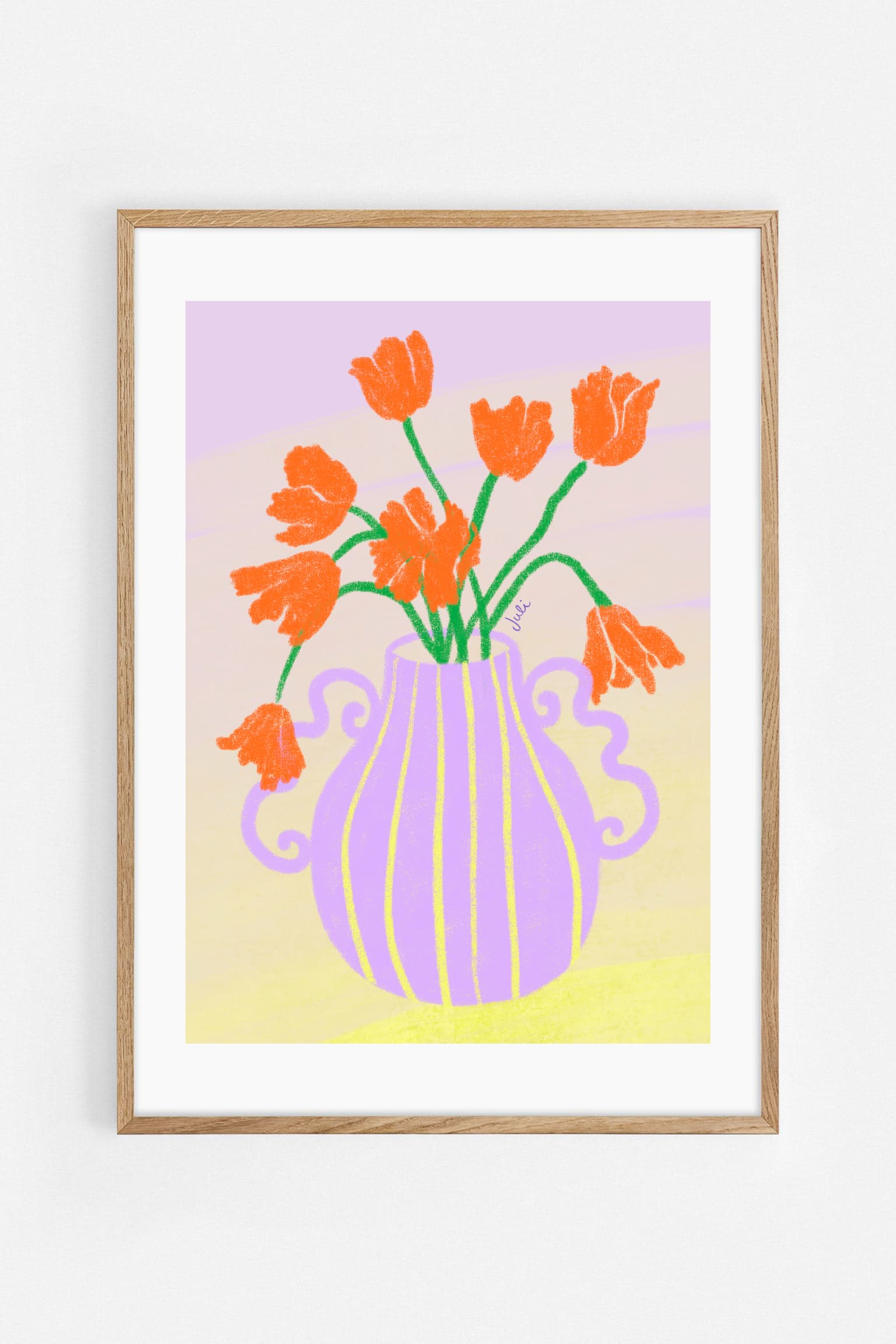
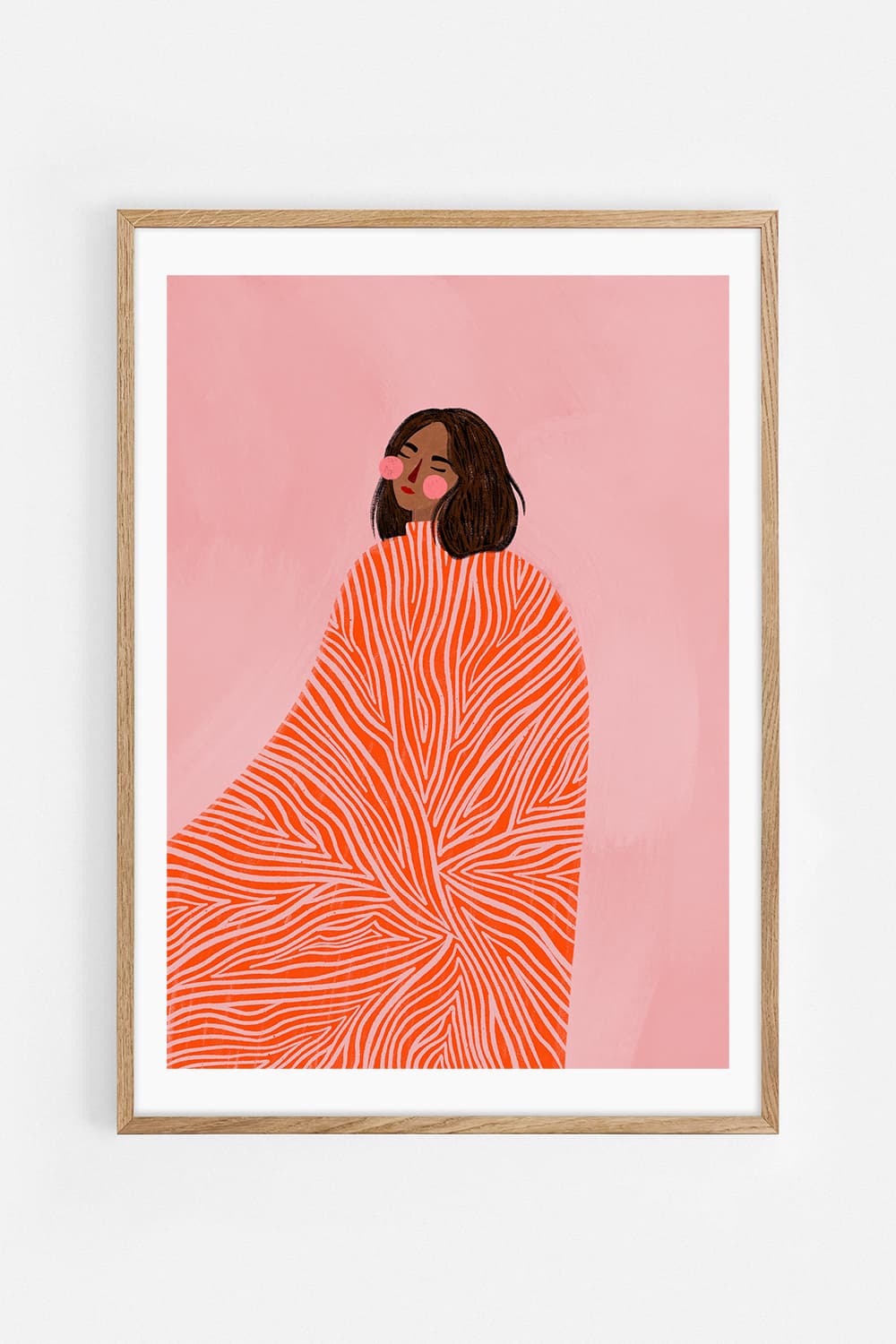
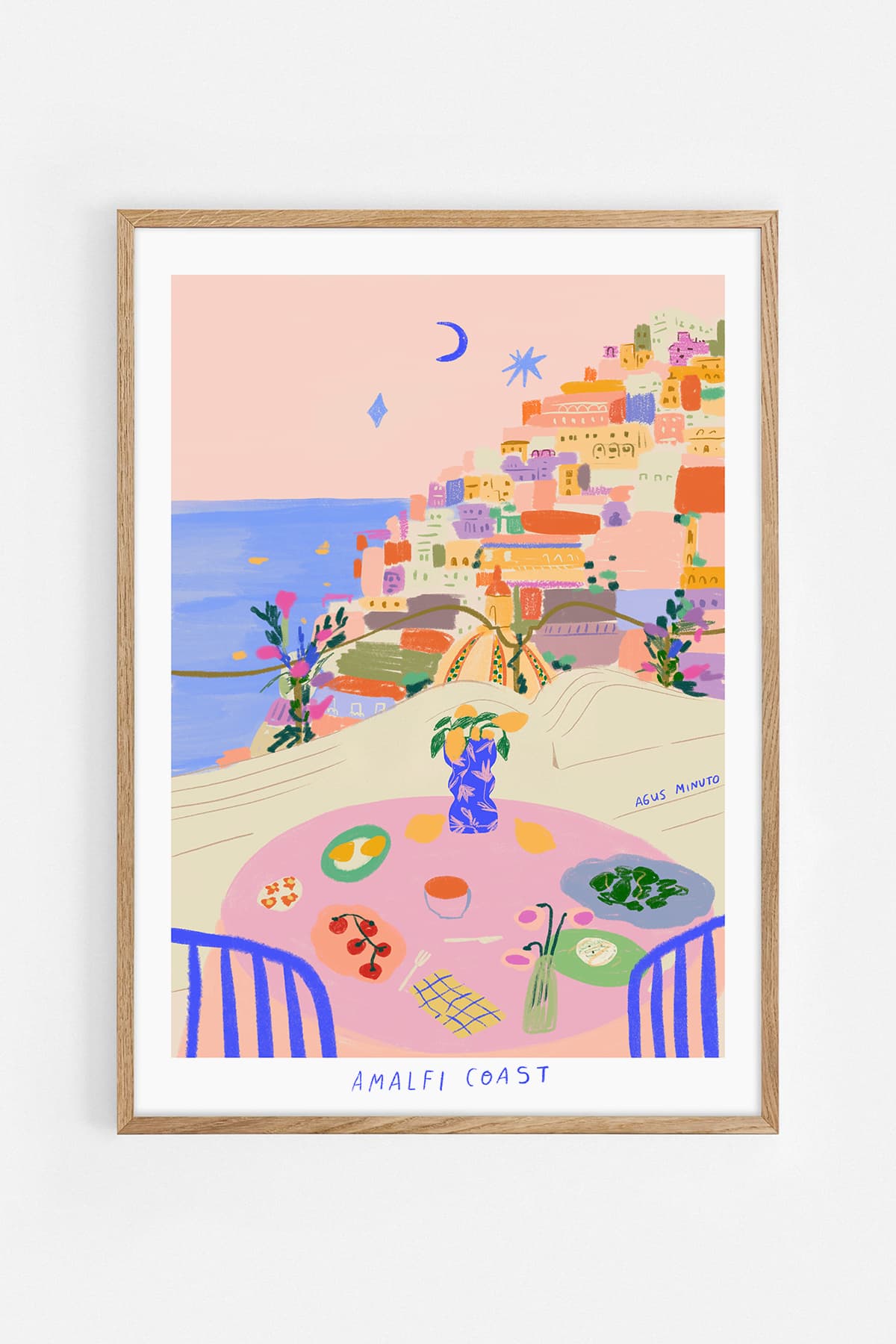
Your artworks do not need to match, but they should have something in common. Repeat one or two colours, mix works by the same artist, or combine different styles around a theme such as travel, botanicals, portraiture or abstract form. Browse our art prints and posters and save the pieces that create an immediate response before narrowing the selection.
3. Mix sizes and orientations
A combination of portrait, landscape and square formats makes a gallery wall feel natural. Use two or three larger works to create structure, then fill the spaces with smaller pieces. Avoid making every gap identical. A consistent distance of roughly 5–8 cm is a useful starting point, but small variations add character.
4. Test the layout on the floor
Arrange the framed works on the floor before making holes in the wall. Take a photograph of each version so you can compare them. You can also trace the frames on paper and tape the shapes to the wall. This helps you check the total scale and the relationship to furniture.

5. Hang the gallery wall at eye level
Treat the complete gallery wall as one composition. Its visual centre should usually sit around eye level, approximately 145–155 cm from the floor. Above a sofa or sideboard, leave enough space for the art to feel connected to the furniture without appearing crowded.
6. Choose frames that support the art
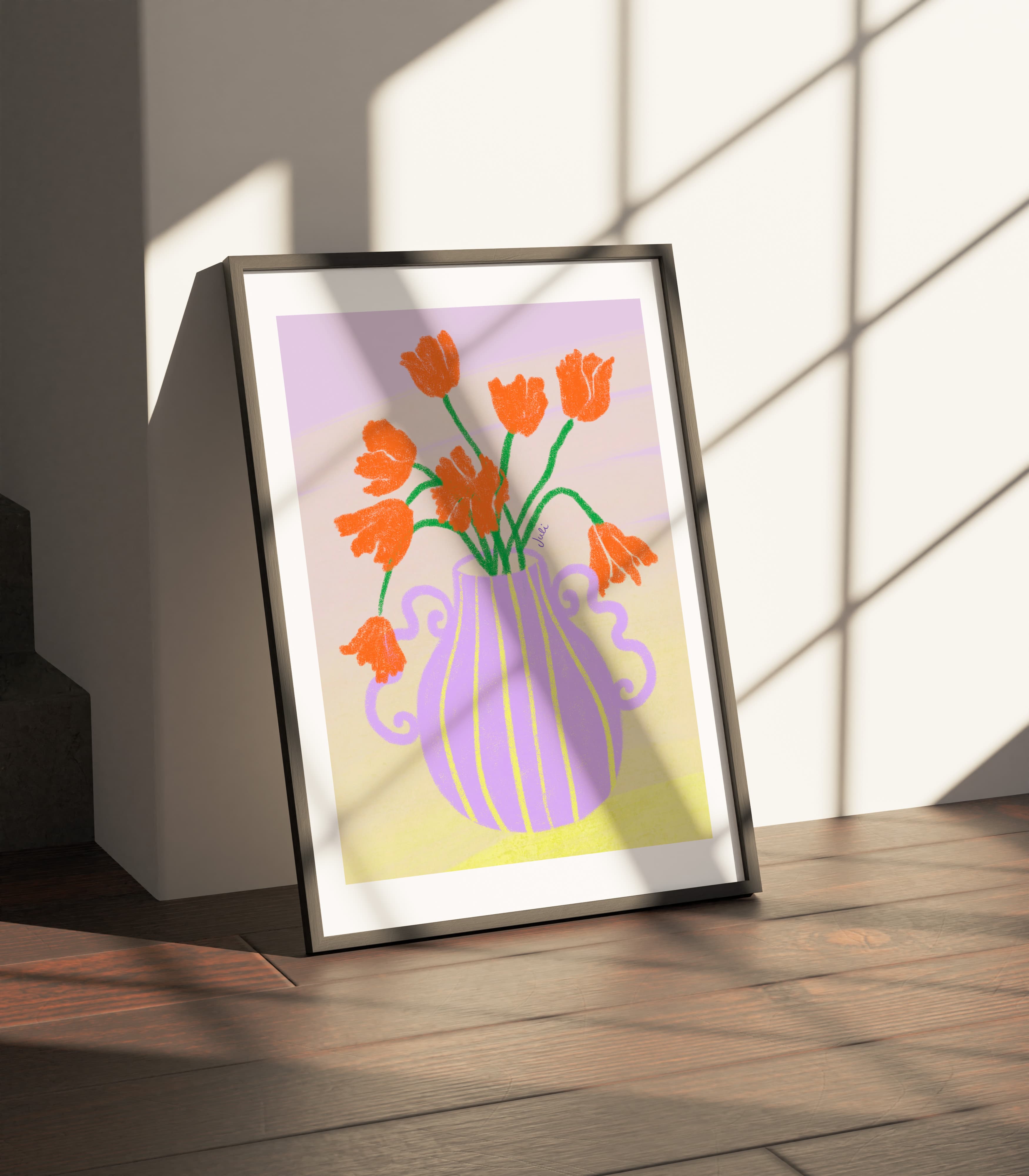
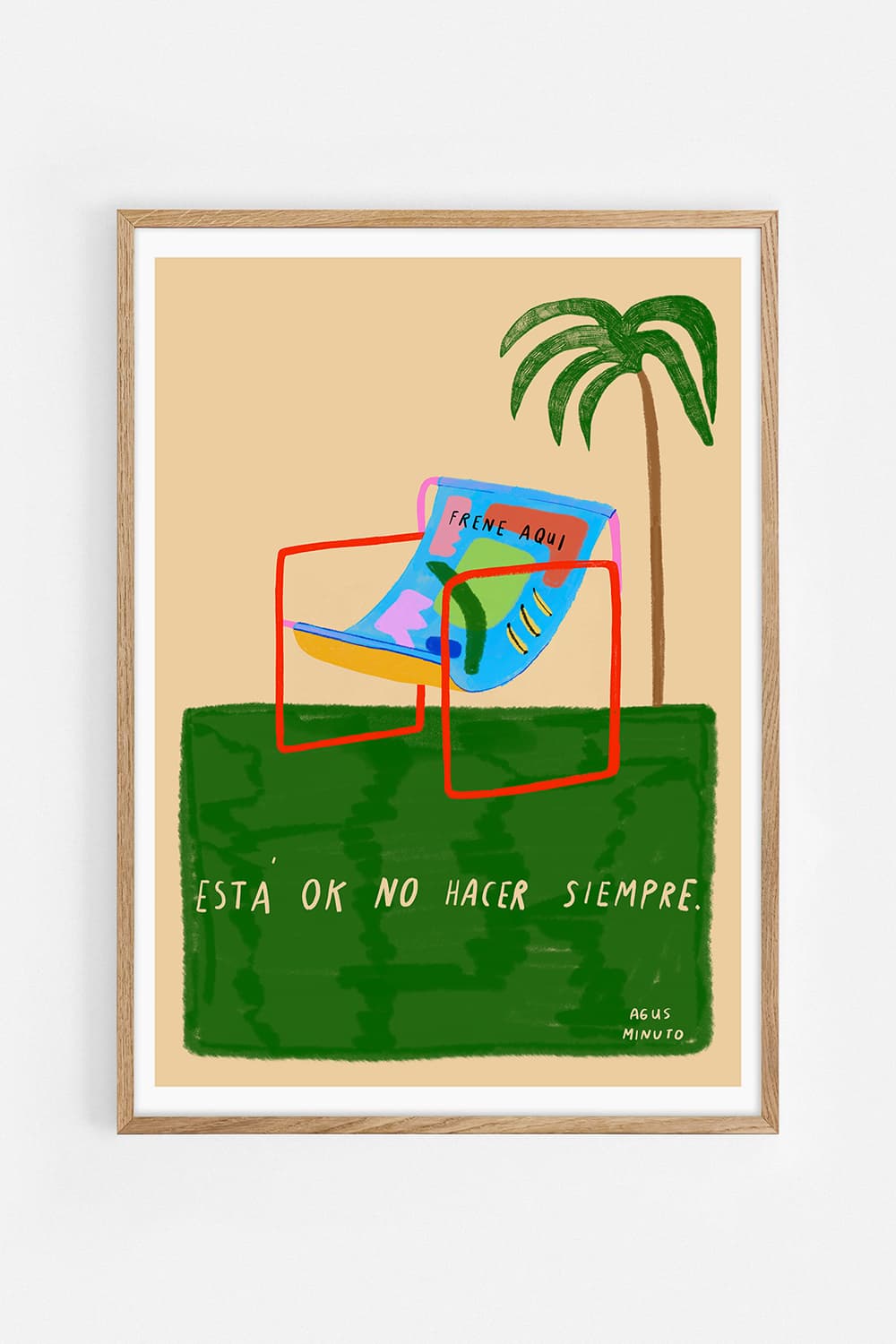
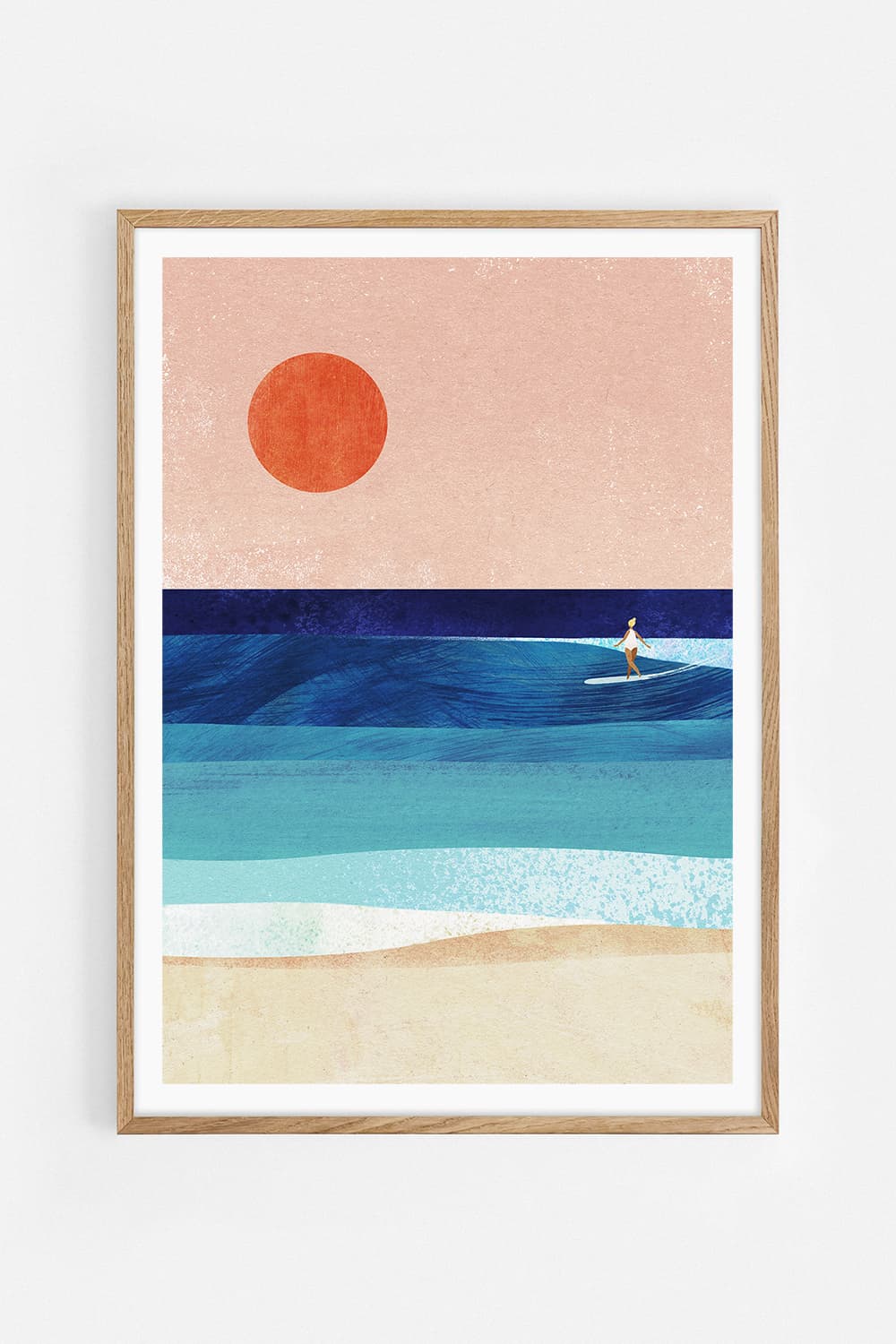
Oak frames add warmth, black frames add contrast and white frames feel quiet and graphic. Mixing frame colours can work beautifully when the artworks share a strong visual thread. If the art already contains many colours, repeating one frame finish often creates useful calm.
7. Leave room for the wall to grow
The most personal gallery walls change over time. Leave one or two edges open so you can add a new discovery later. Explore our independent artists to find works that bring a distinct point of view to the room.
Gallery wall questions
How much space should there be between gallery wall frames?
A gap of 5–8 cm is a reliable starting point. Keep the spacing visually consistent, then adjust slightly where different frame shapes need more air.
Do all gallery wall frames need to match?
No. Matching frames create calm, while a considered mix feels more collected. Repeat at least one finish or colour to hold the group together.
How high should a gallery wall hang?
Aim for the visual centre of the complete group to sit around 145–155 cm from the floor, then adjust for the furniture below it.