







Art & interiors
Compare Art Print Sizes: Paper, Proportion and Wall Space

Comparing print sizes means more than choosing the largest rectangle that fits. Paper dimensions, the shape of the image and the outside frame all affect the result. Start with four formats listed for Blue Line Face and White lines I, then use a full-size paper test on your own wall.
Read the size as width and height
A4 measures 21 × 29.7 cm. The other verified formats here are 30 × 40, 50 × 70 and 70 × 100 cm. In portrait orientation the shorter side is the width. A landscape work uses the long side across the wall. Check orientation in the product image rather than turning the art to fit.
Use the diagram as a relative comparison
The accompanying diagram draws each paper rectangle at the same scale: six drawing units per centimetre. All share a baseline, so their differences remain visible. It shows paper only, without frame thickness. Its physical size on your phone or monitor depends on the screen; it is not a full-size printable template.
Notice that the proportions differ
30 × 40 has a width-to-height ratio of 0.75; 50 × 70 is about 0.714 and 70 × 100 is 0.70. A4 is about 0.707. These are similar but not identical rectangles. Do not stretch a digital artwork to compare them. Check the selected product preview for how that particular format is presented.
Compare the same artwork at two sizes
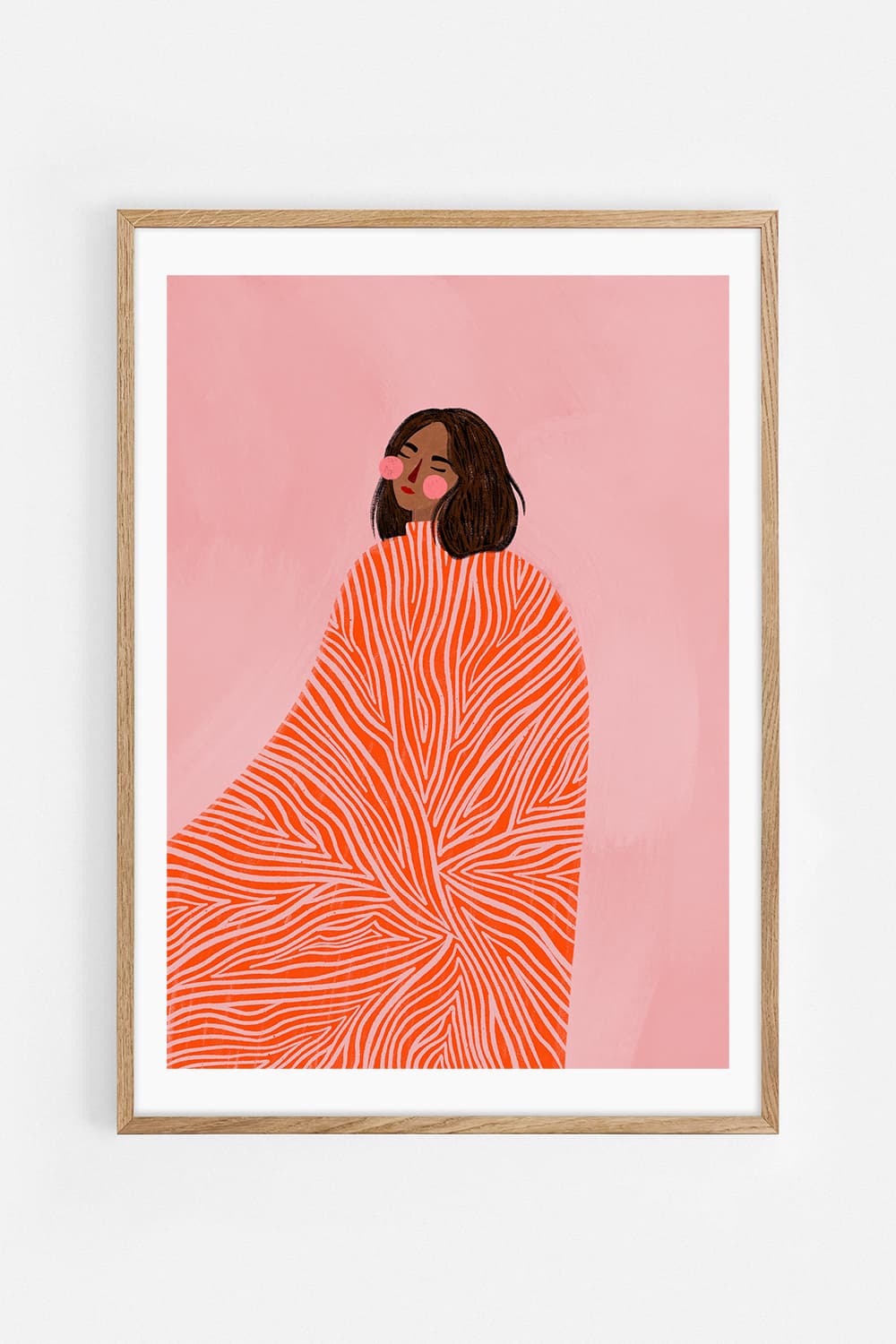
Blue Line Face by Athene Fritsch keeps a light field around a blue drawn face. White lines I by Vitor Costa has a larger blue area. Equal outside dimensions therefore need not produce equal visual weight. First compare one work in two sizes; then compare a different composition at the same size.
Add the frame before allocating wall space
Choose a matching paper format in Oak Frame, then obtain the actual outside measurements for the chosen frame. The named 50 × 70 cm format describes the paper it accepts; it does not establish the exact installed outer width. Add gaps as separate measurements when planning several frames.
Make a two-size shortlist
Cut or join paper to represent two proposed outside rectangles. Mark each size on its template, view from the doorway and sitting position, and photograph both from the same spot. Choose based on the real furniture and wall clearances. Confirm current size options and what is included before placing the order.
Questions about this layout
Is the diagram showing actual screen centimetres?
No. It preserves relative proportions; its displayed size changes with the screen. Measure real paper templates separately.
Will every size have exactly the same image proportions?
The paper ratios differ slightly. Use the selected product preview and preserve the original artwork rather than stretching it.
Prints and frames in this guide
 Blue Line Face
 White lines I
 Oak Frame
Keep exploring
